Spiced Maya cacao from Antigua, ceremonially blessed: Cacao Jun Ajpu has been made by hand since 2009 – ground on stone and produced in small batches of around 23 kilos.
Rooted in the heart of Guatemala and guided by the Maya calendar, Cacao Jun Ajpu brings vitality to body and mind. This ceremonial cacao is made by hand, organically grown and blessed in a fire ceremony. A recipe with cinnamon, chilli, vanilla and Panela (unrefined whole cane sugar) that awakens the senses and opens the heart – flavour, life force and ceremony in one cup.
Taste the origin. Taste the magic.
Four steps, all in Guatemala, all by hand.
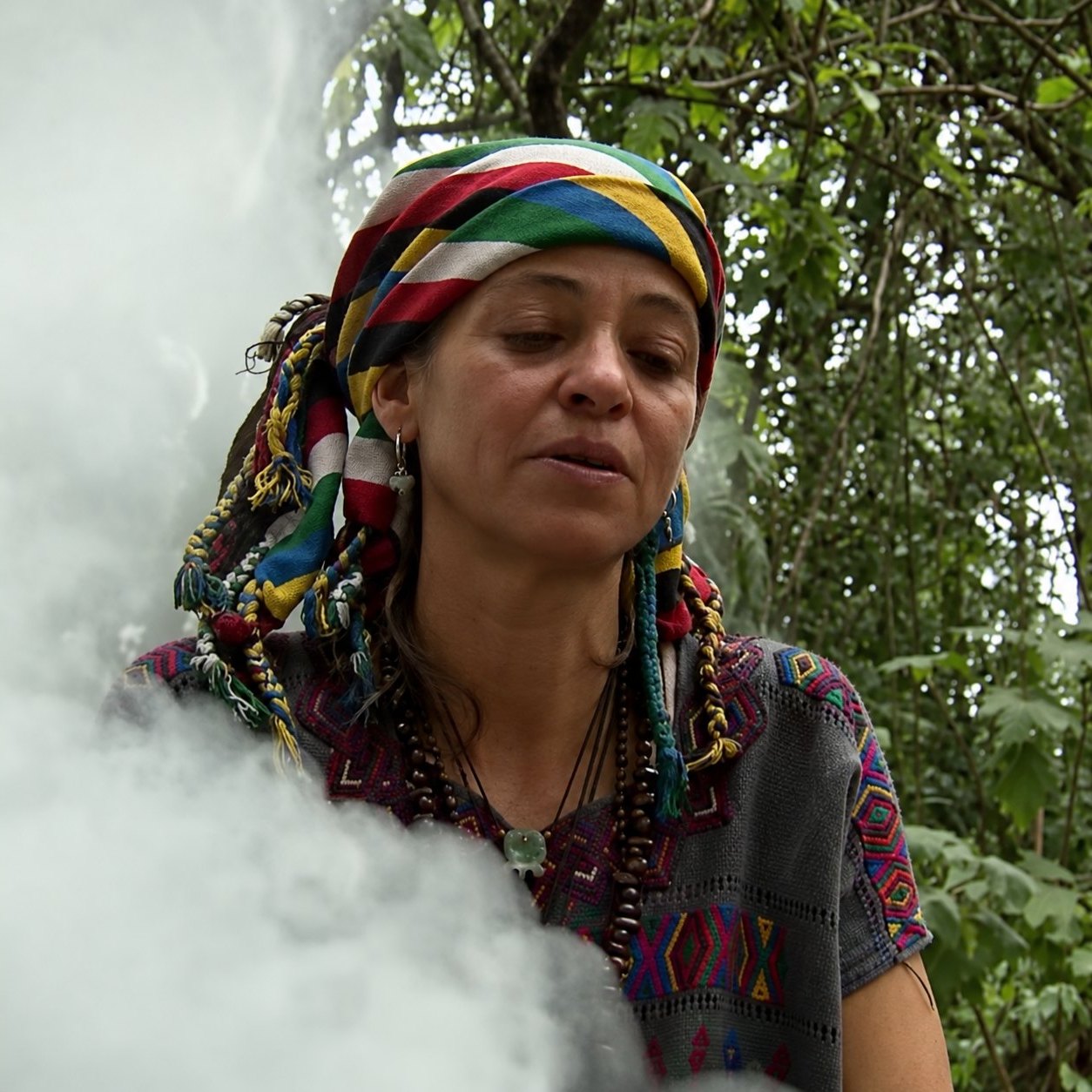
The founder of Cacao Jun Ajpu is called Gg. Today she is not only a chocolate maker: over the past decades she has immersed herself in the Maya calendar and studied it – and she is now a Maya priestess, an Ajq’ij.
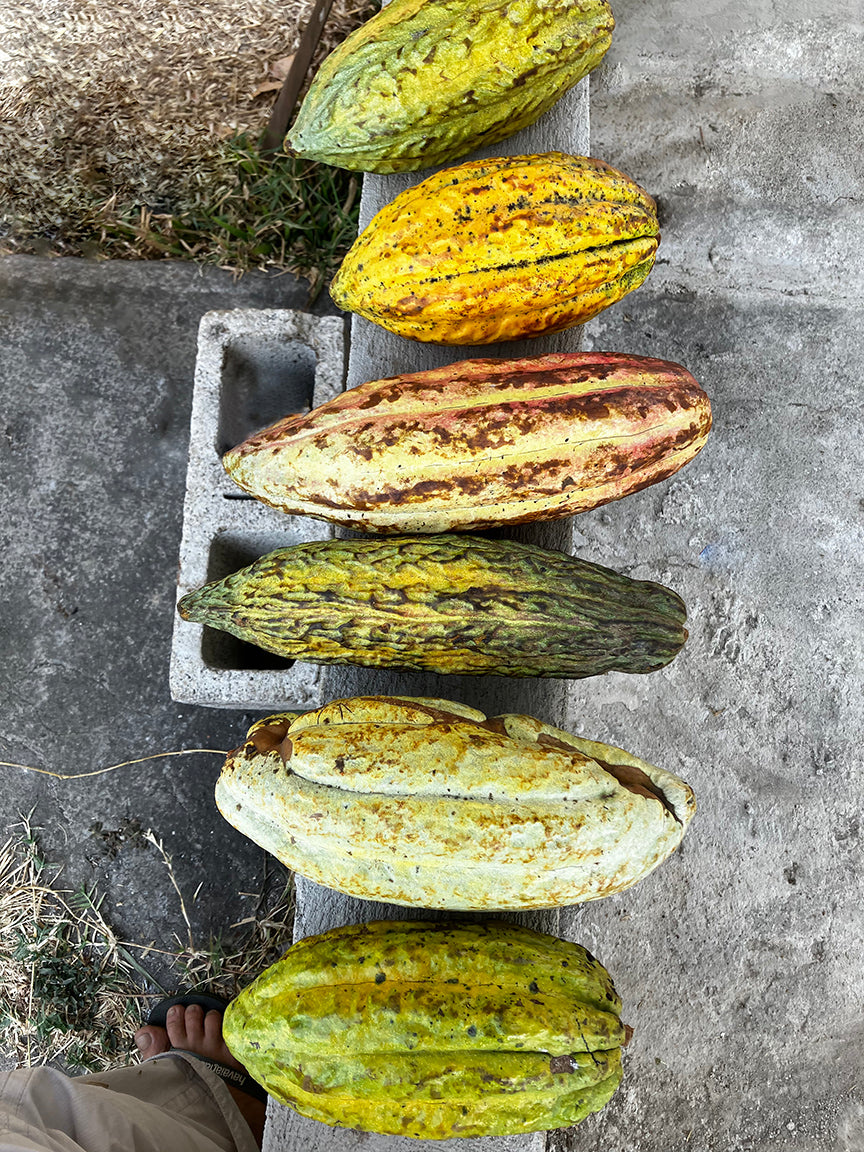
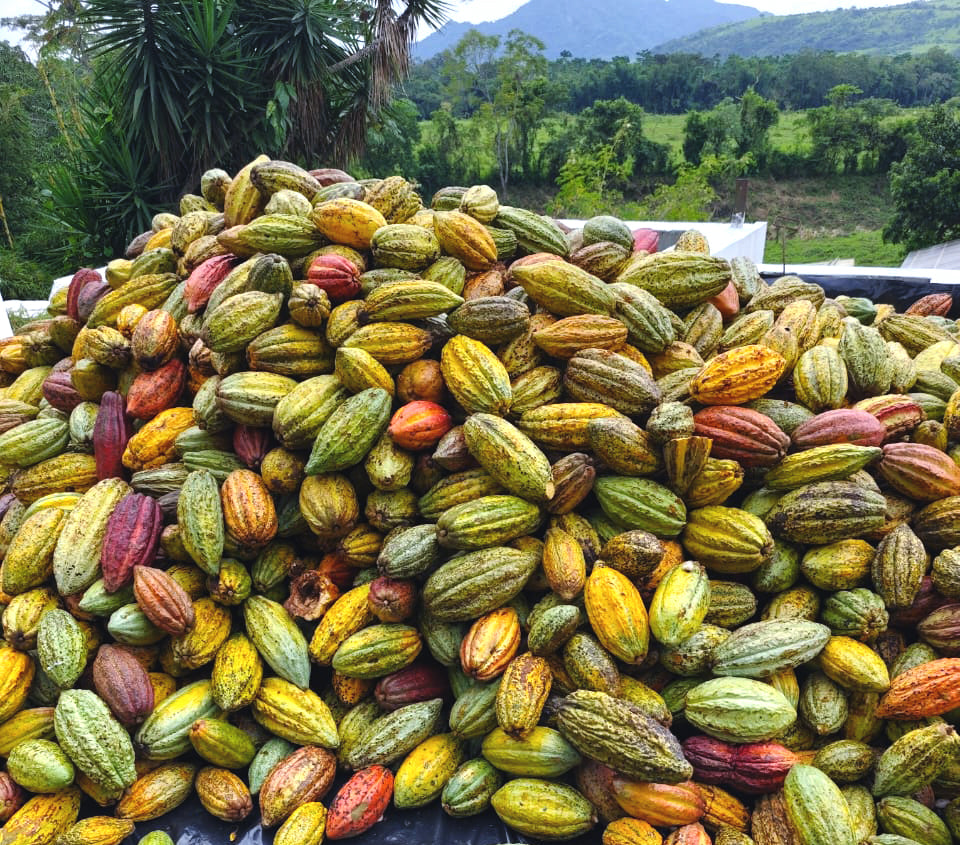
The cacao comes from two cacao-growing projects that are themselves strongly committed to regenerative agroforestry and to preserving old varieties. Jun Ajpu cacao is made from Trinitario Acriollado – a variety close to Criollo – and other Criollo lines.
The growing areas lie in the Guatemalan lowlands: a region with many volcanoes, mineral-rich soils and reliable rain, which together create a special climate. It is one of the oldest growing areas in Guatemala – cacao has been cultivated here for around 3,000 years.
Cacao was sacred throughout Mesoamerica: as a plant, as food and as a living symbol of rebirth and renewal. Much of this has been lost today. Even the families who grow cacao mostly no longer drink it – their own harvest is sold, the village shops stock industrial cocoa, and the ceremonies that belonged to cacao are often forgotten.
This is exactly where Jun Ajpu comes in. In smaller villages, the team helps women build their own small businesses and supports their projects so that they can take part in the market – and so that, along with the cacao, the knowledge about it stays in the village. As an Ajq’ij, Gg keeps the connection between cacao and the Maya lineage alive and brings the ceremony back in its original form.
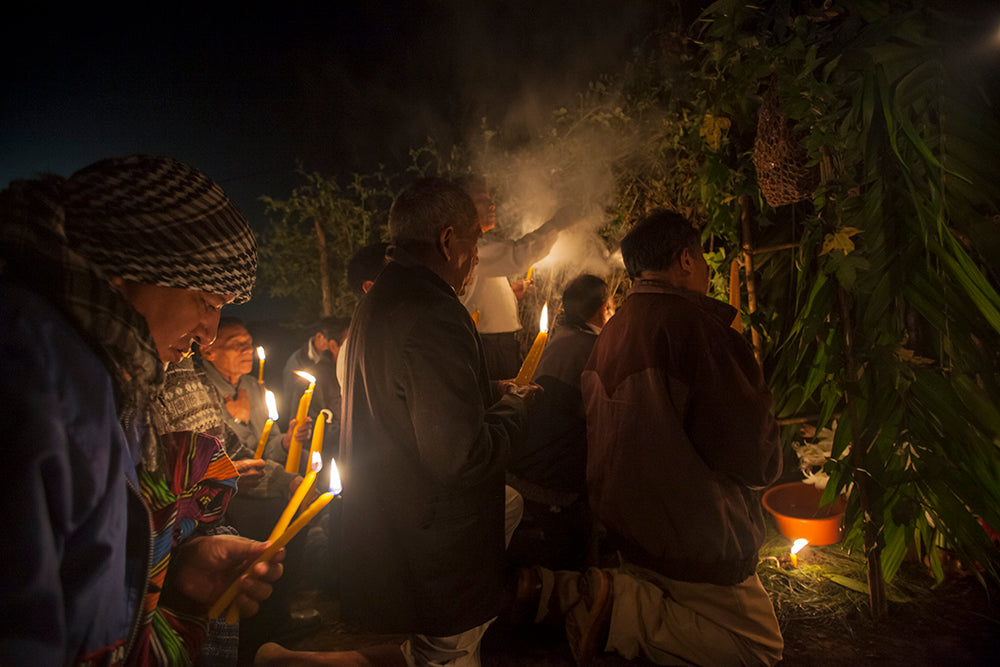
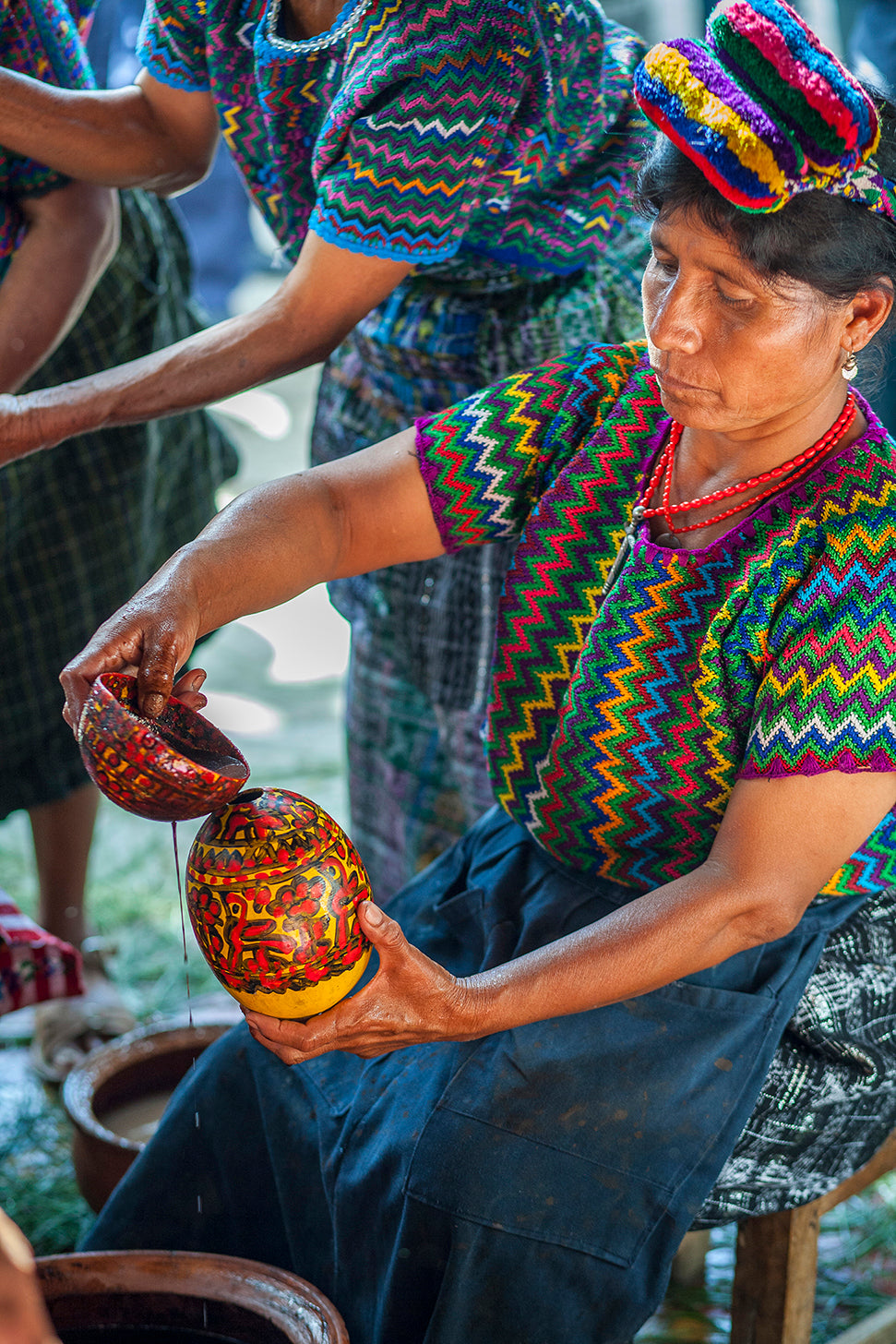
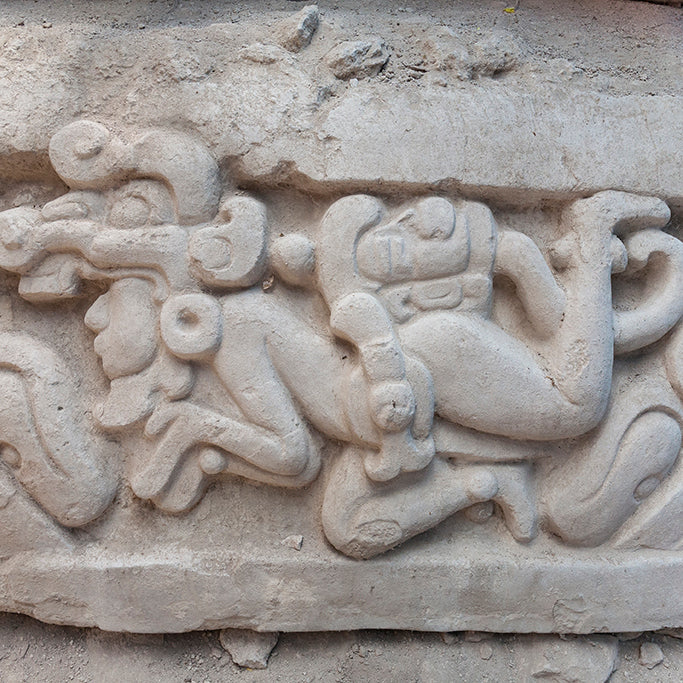
For the Maya, cacao was far more than a drink: it was a sacred gift, used in ceremonies and rituals and as an offering on special occasions. The foam was regarded as its divine essence. It stood for cleansing and renewal – of body and soul – and was the most highly valued quality of the drink. It was made by pouring the cacao from a great height from one vessel into another, as countless Maya vessels, finds and texts show. That is exactly what you can see in the photo.
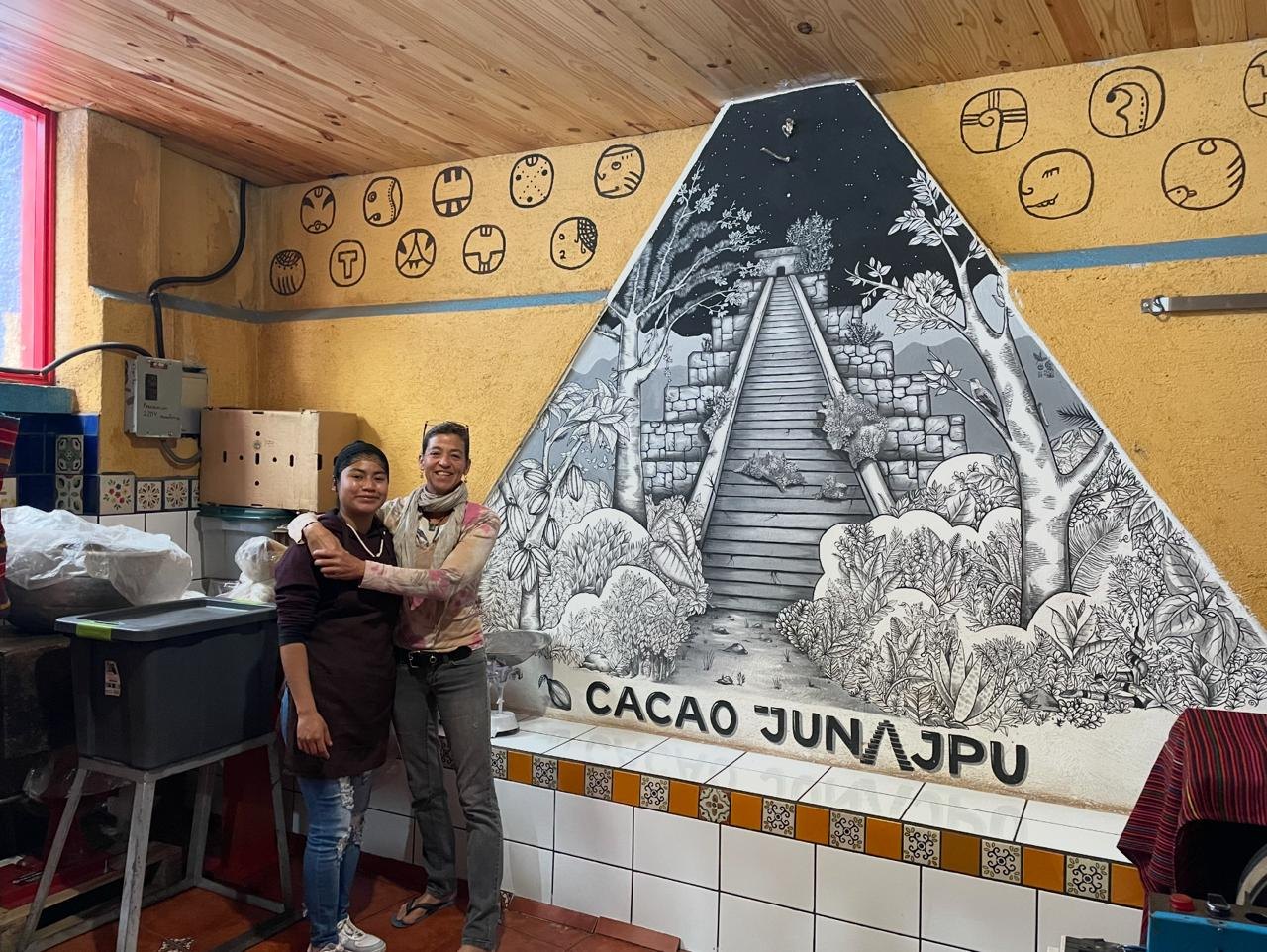
Two women are at the heart of Cacao Jun Ajpu – Gg and Fatima – and with them the farming families and villages.
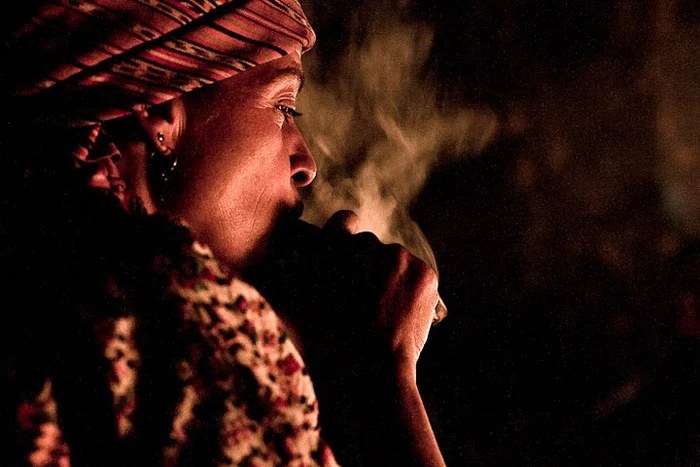
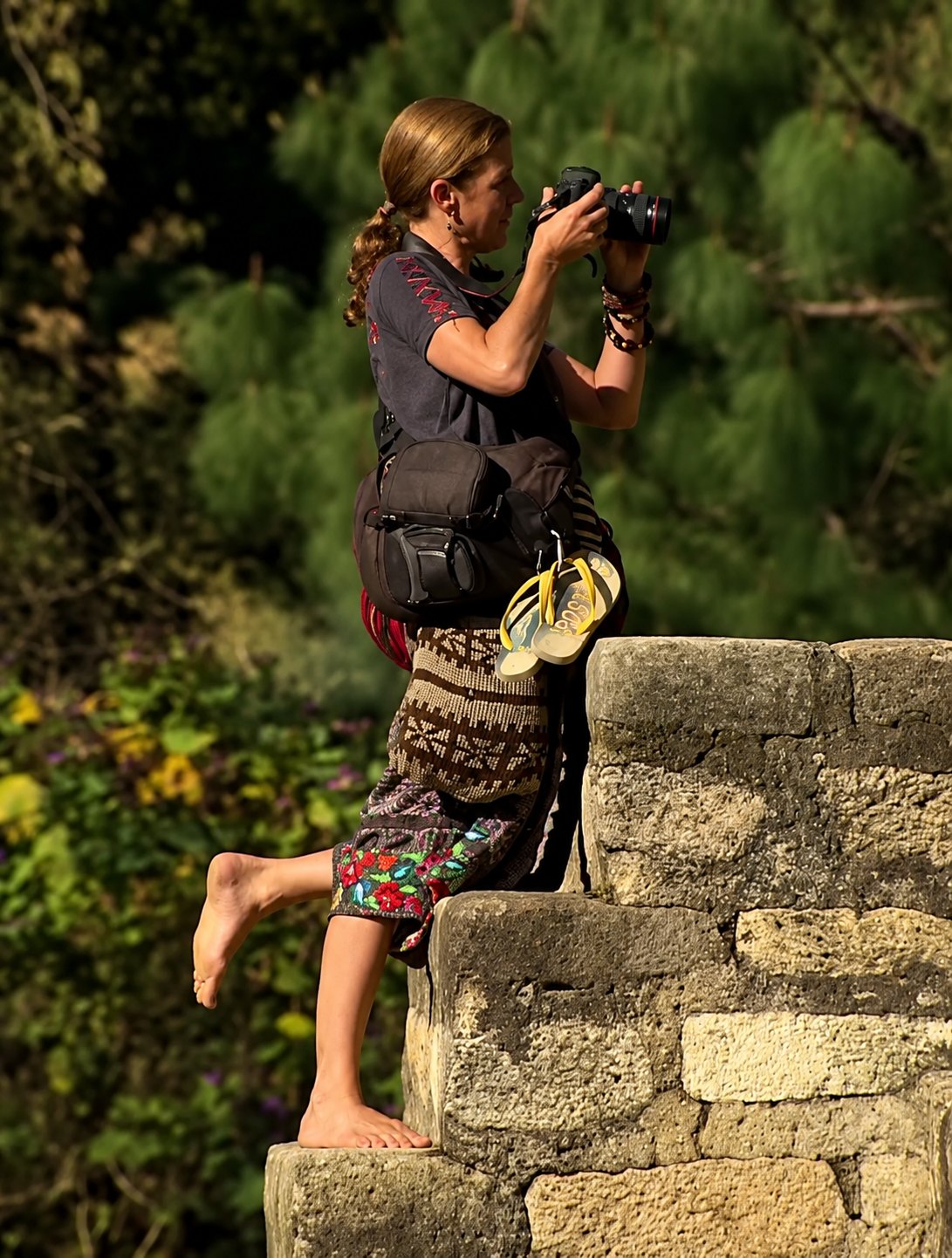
Almost two decades ago, Gg set out as a journalist to trace the roots of Maya culture. She stayed – and for years she learned from elders in the mountains, at markets and at ceremonies, until she herself was initiated as an Ajq’ij, a day-keeper. From Antigua, she still works closely with the farming families her cacao comes from.
‘The only thing missing back then was good cacao. I couldn’t find any – and this in the cradle of all cacao. I didn’t want to start a business; I just wanted to bring cacao to the ceremonies. Back then, none was being served there!’
No recipes had survived showing how the Maya prepared their cacao for ceremonies. So Gg began to experiment – and over many years she felt her way towards the flavour. The result is the spiced Jun Ajpu cacao: a living reminder of how cacao was once drunk in ceremonies – and now is again.
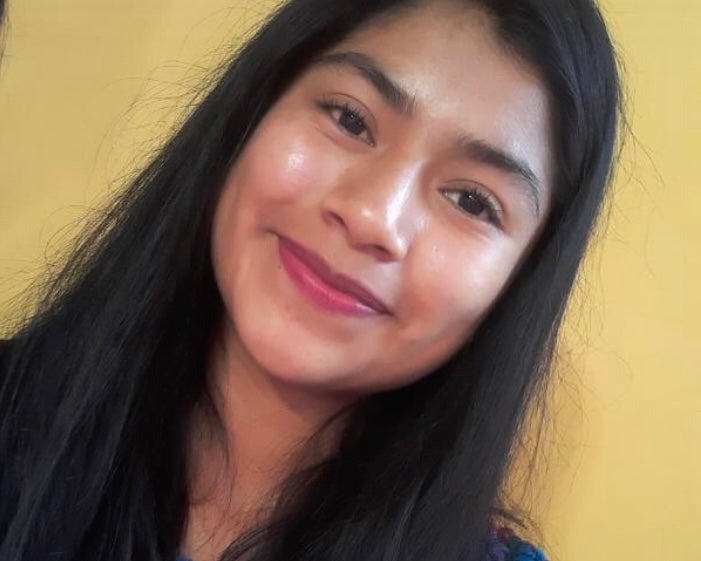
Fatima is a Kaqchikel Maya from San Antonio Aguas Calientes, a village near Antigua. She has been learning from Gg since 2019 and works alongside her in the business – today she shares the daily work in the workshop.
Her everyday work: sorting, roasting, grinding, packing – and an eye for when a batch is just right.
Gg describes her as ‘a true maestra of cacao’ and ‘a force of nature’ who puts values before business: no shortcuts on quality or tradition, not even for speed or profit. ‘She is the net that holds everything together.’
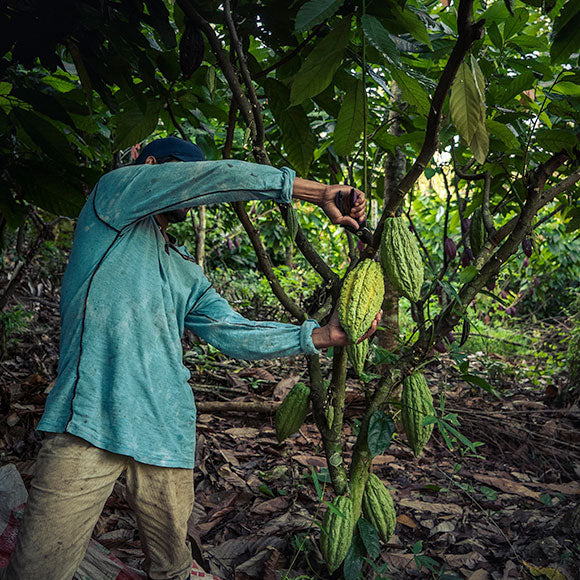
Behind every bean are small family farms in Escuintla and Izabal that grow their cacao in the forest and harvest it by hand. Jun Ajpu knows them personally and buys directly, face to face – the short distance to the workshop makes it possible to collect every harvest in person. The price paid is deliberately above the market rate.
Alongside the cacao, the farms grow shade trees, fruit and spices – the forest is the capital, not the plantation. Fermenting and drying are done using traditional methods.

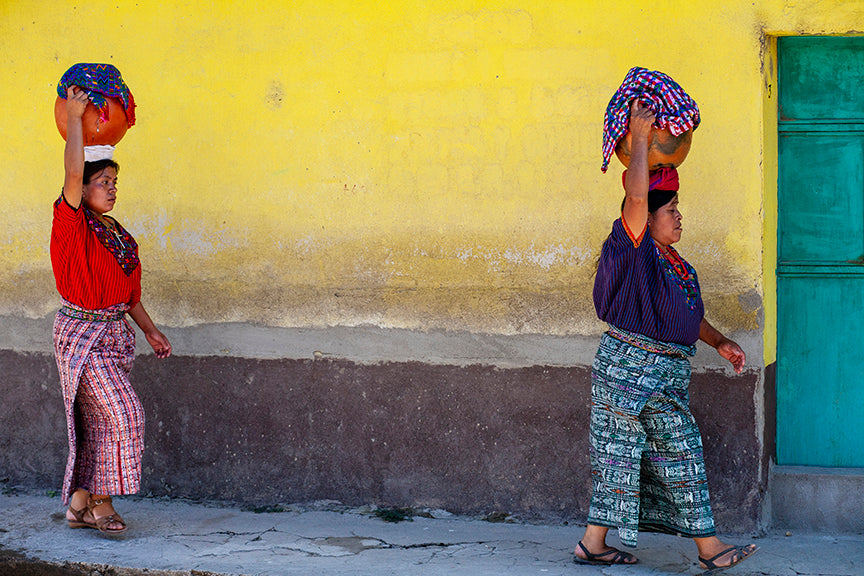
In San Andrés Osuna and other Maya communities, much of the work around cacao is in women’s hands: sorting the beans, roasting them on the Comal (clay griddle), grinding them on the stone and preparing the drink for festivals and ceremonies. In San Andrés Osuna this has become a shared project that Jun Ajpu supports – so that the women can earn their own income from this work.
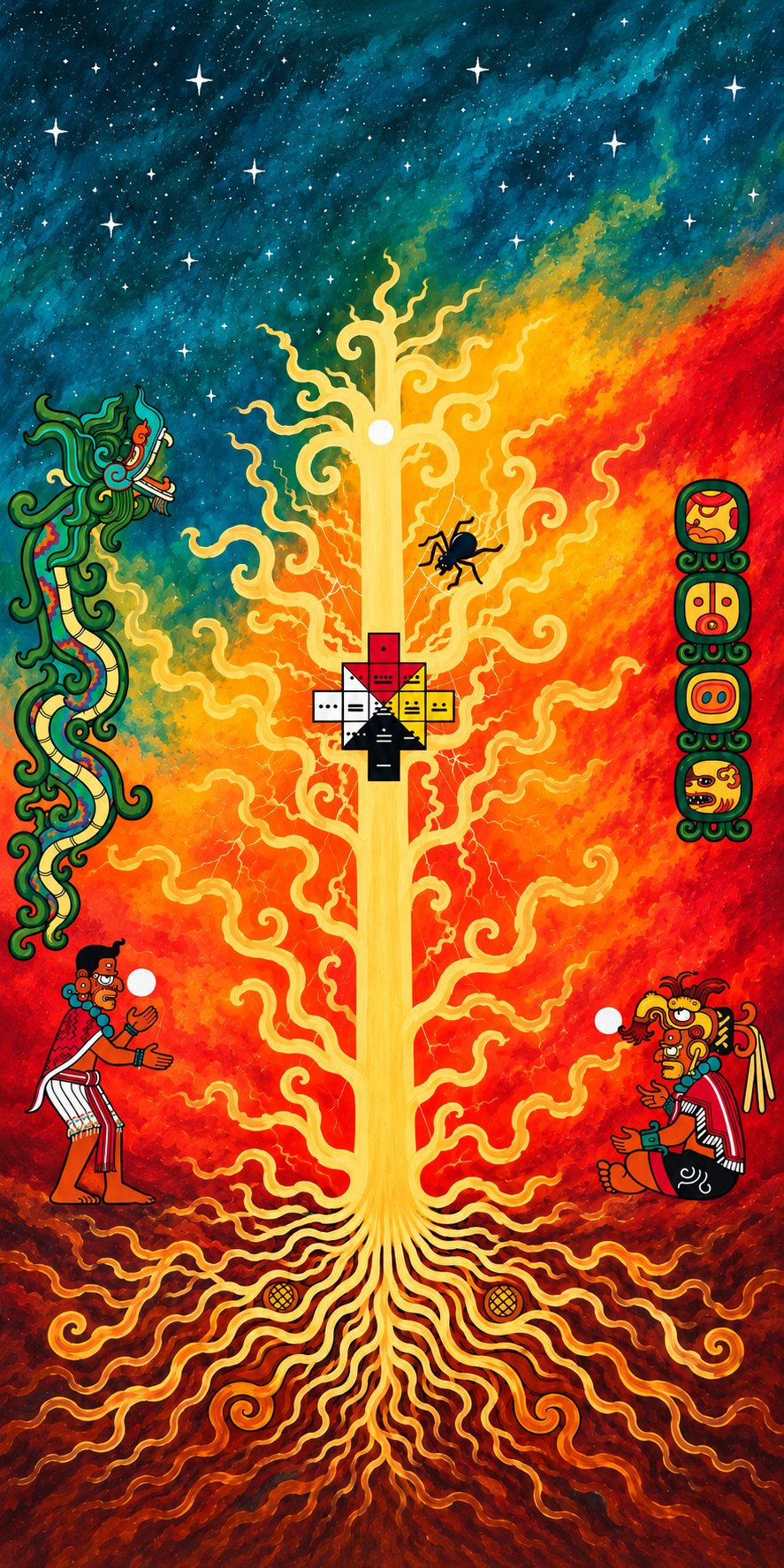
Every batch of Jun Ajpu carries the Nawal of the day on which it was made. We will soon explain here in detail what this means – with the 20 Nawales, the 13 numbers and your own day sign.
The sacred calendar of the Maya, the Cholq’ij, counts 260 days: 20 Nawales combined with 13 numbers. Each day has its own power.